F1 tyre compounds: C1 to C5
Pirelli produces five dry F1 tyre compounds, numbered from C1 (hardest) to C5 (softest). For each Grand Prix, Pirelli picks three of the five and rebadges them as hard (white sidewall), medium (yellow) and soft (red).
How they behave
| Compound | Hardness | Lap pace | Durability | Warm-up time |
|---|---|---|---|---|
| C1 | Very hard | Slow | Very high | Long |
| C2 | Hard | Slow | High | Long |
| C3 | Medium | Medium | Medium | Medium |
| C4 | Soft | Fast | Low | Short |
| C5 | Very soft | Very fast | Very low | Very short |

¿Te gustó este artículo?
Pon a prueba lo que aprendiste con nuestra app oficial Formula Trivia One Master.
Ver App GratisWet compounds
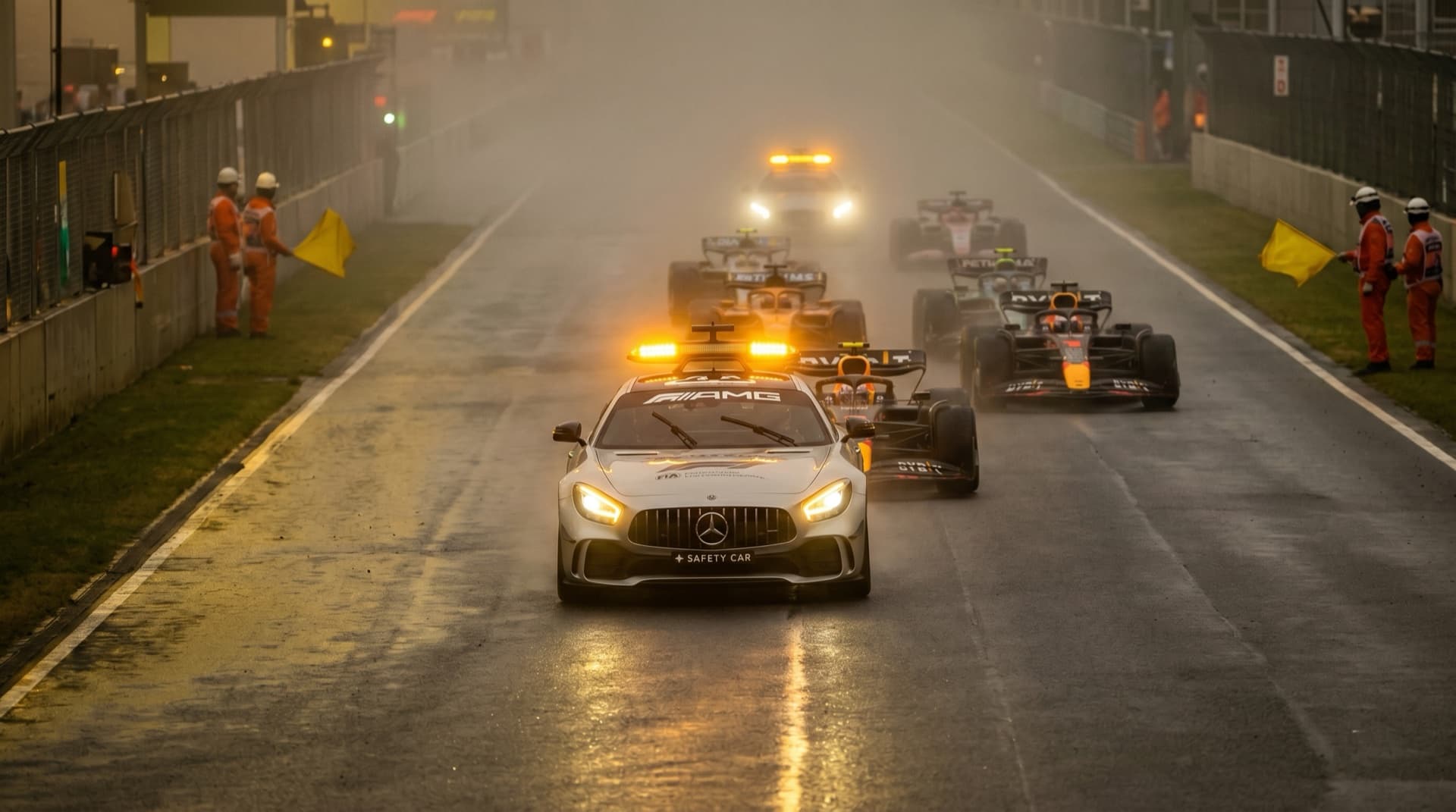
In addition to the dry compounds there are two specific wet tyres:
- Intermediates (green sidewall): damp track without standing water.
- Full wet (blue sidewall): heavy rain with standing water on track.
How Pirelli picks the weekend compounds
The selection matches the circuit profile:
- High downforce, abrasive tracks (Silverstone, Suzuka) → harder compounds (C1–C3).
- Slow, low-degradation tracks (Monaco, Singapore) → softer compounds (C3–C5).
Usage rules
- In a dry race, every driver must use at least two different compounds (unless a race-ending Safety Car neutralises the rule).
- In qualifying, the soft is normally chosen for the fastest possible lap.
FAQ
Which compound is fastest per lap? The soft of the weekend (usually C4 or C5).
Why do the "hard/medium/soft" labels change each GP? Because Pirelli's selection changes. The "hard" in Monaco can be C3, while in Silverstone it's C1.
Can you mix intermediates and slicks on one lap? Not by regulation, but drivers can switch between stints depending on conditions.
Want to master F1 strategy and regulations? Test your knowledge with Formula One Trivia, the official app for iOS and Android.